
CURRICULUM
(A) PRIMARY STAGE (Grades I – V)
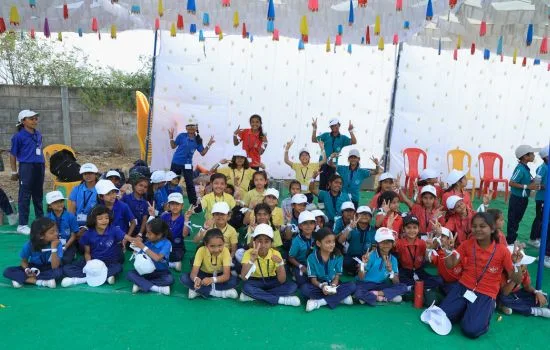
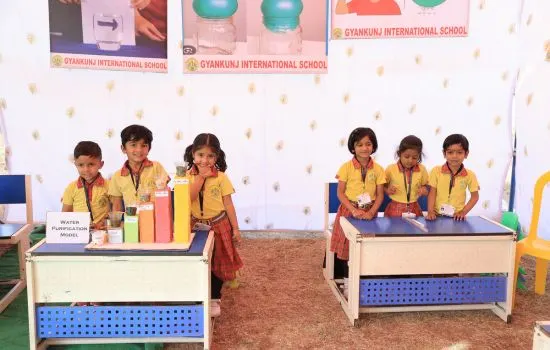
At Gyankunj International School, Khargone, the Primary Stage focuses on building a strong foundation for lifelong learning. We believe that every child has unique abilities, and our goal is to nurture these abilities through a supportive and engaging learning environment.
Our curriculum is designed in accordance with CBSE guidelines and the National Education Policy (NEP) 2020, emphasizing conceptual understanding, creativity, and active participation. Learning at this stage goes beyond textbooks and encourages children to explore ideas through activities, experiments, projects, and interactive classroom discussions.
The primary years focus on developing essential skills such as reading, writing, communication, logical thinking, and collaboration. Teachers guide students to become confident learners who can express their ideas, work in teams, and develop curiosity about the world around them.
To make learning meaningful and enjoyable, the school organizes field trips, educational workshops, subject-based celebrations, and cultural activities throughout the year. These experiences help children connect classroom learning with real-life situations and broaden their perspectives.
The school also encourages a strong reading culture, especially in the early years, to develop language skills and imagination. Activities such as class assemblies, storytelling sessions, value-based programs, and health awareness initiatives help instill discipline, empathy, and healthy habits in students.
At the Primary Stage, our aim is not only academic development but also the holistic growth of every child—socially, emotionally, physically, and intellectually.
(B) MIDDLE STAGE (Grades I – V)
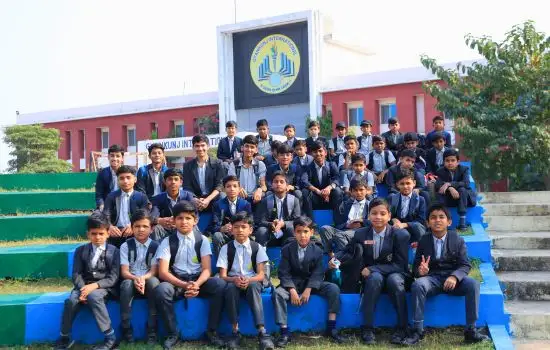
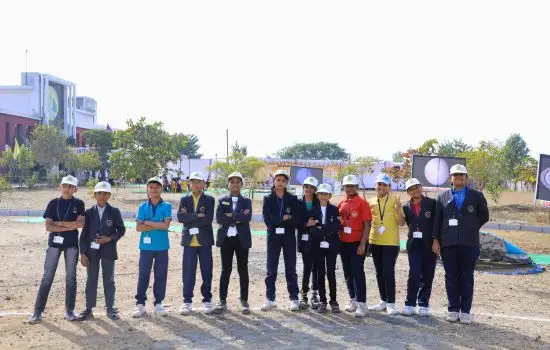
The Middle Stage at Gyankunj International School marks an important phase where students transition from foundational learning to deeper academic exploration. During these years, the school focuses on strengthening both scholastic knowledge and essential life skills.
Our approach encourages students to think independently, ask questions, and apply their learning in practical situations. Teaching methodologies include project-based learning, collaborative group work, discussions, presentations, and technology-enabled learning.
Students are exposed to a wide range of academic and co-curricular opportunities that help them discover their interests and talents. Activities such as science projects, debates, club activities, sports, and cultural programs allow students to develop confidence, leadership, and teamwork skills.
Recognizing that this stage is also a time of emotional and social development, the school provides a supportive learning environment where teachers, counselors, and parents work together to guide students effectively. Equal importance is given to discipline, values, and character building, helping students develop responsibility and respect for others.
The Middle Stage curriculum also integrates technology, critical thinking, and problem-solving skills, preparing students to adapt to the rapidly evolving world around them.
At Gyankunj International School, the goal of the Middle Stage is to nurture responsible, curious, and confident learners who are prepared for the academic challenges ahead.
(C) MIDDLE STAGE (Grades IX – X)
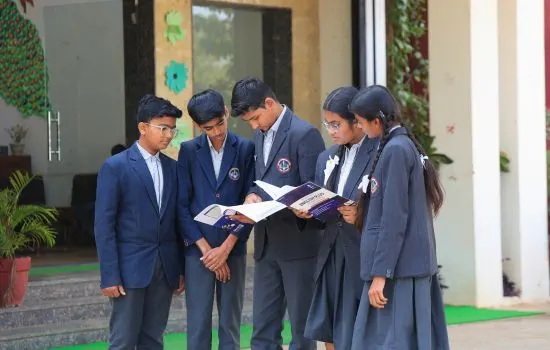
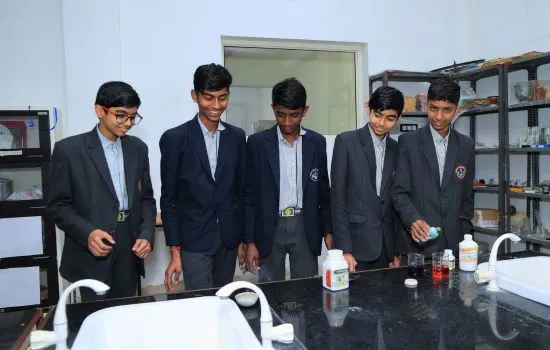
The Senior Stage at Gyankunj International School prepares students for both academic excellence and future readiness. At this level, learning becomes more structured and focused, while still encouraging curiosity, innovation, and independent thinking.
Following the CBSE curriculum and NEP 2020 framework, students gain in-depth knowledge across subjects while developing analytical, problem-solving, and decision-making skills. Teaching methods include experiential learning, research-based projects, practical experiments, and collaborative discussions, ensuring that students understand concepts thoroughly.
Special emphasis is placed on STEM education, encouraging students to explore science, technology, engineering, and mathematics through innovation and experimentation. This approach helps build scientific temperament and prepares learners for future academic and career opportunities.
Languages, humanities, sciences, and mathematics are taught through creative and interactive methods, including presentations, role plays, projects, and analytical discussions. These activities help students develop communication skills, confidence, and a deeper understanding of diverse subjects.
Teachers at the Senior Stage act as facilitators and mentors, guiding students to explore multiple perspectives and develop independent thinking. The school also recognizes the importance of addressing different learning styles and providing the support required for each student to succeed.
At this stage, the focus is not only on preparing students for board examinations, but also on helping them grow into responsible, thoughtful, and socially aware individuals who are ready to contribute positively to society.
CURRICULUM
Academic Session: 2025–26
Download curriculum and syllabus for each class.
GRADE 1
GRADE 2
GRADE 3
GRADE 4
GRADE 5
GRADE 6
GRADE 7
GRADE 8
GRADE 9
GRADE 10
Foundational Curriculum